Saturday, May 20, 2023

My findings about the Nature and Extent of the Student Challenge!

The challenge for my students this year is to make an accelerated shift in Reading by being more culturally visible and making use of prior knowledge that will boost confidence and capability in Reading. 


One of the significant challenges my priority group is facing is the inability to connect ideas in a text, lack of concentration during reading, needing more prior knowledge and most importantly understanding the meaning between the lines.


How to overcome these challenges?


I am trying to incorporate different ideas and thinking strategies such as Reciprocal Teaching ( Tuakana Teina), more scaffolding and providing opportunities for an extended discussion of the text. 

Some of the strategies that I have already started working on it are : 

  • More structured lessons - I have made some changes in my Reading Plan such as using multimodal planning. 


  • Activating prior knowledge

  • Explicit teaching like using small steps to allow students to understand and practise.

  • Choosing texts and activities that are appropriate and matched to their level of ability.

  • Collaborative learning - I am trying to incorporate more peer learning.

  • I am working on my feedback as well, trying to be more explicit.

I actually created a Workbook to keep a record of the texts and the reflections.


Wednesday, May 3, 2023

Eliza's beautiful thought about the Indian Classical Dance!

We had our cultural celebration in Term One and this is what some students came up with. It was really nice to see the cultural integration taking place. Eliza is a NZ Maori but she chose to write about Indian Culture. On the other hand, Chloe who is a NZ Maori as well, she chose to do an Indian Classical dance. This cultural celebration tends to be a rich learning experience for the Glen Innes students as they were able to do a lot of research work after the celebration and came up with brilliant slide presentations and other interesting activities.


Response to Cultural Celebration Slides


As Vygotsky mentioned, children's cognitive development is affected by culture in two ways. First, children acquire most of their knowledge (the contents of thought) through culture. In addition, not only does culture teach children what to think but also how to think.

Sunday, April 2, 2023

Some Observations made and as well as collecting evidence and data....


My priority group is made up of a mix of Year 6 and Year 7 students. I have taught only one student last year and all others are from the other classroom. These students prefer to sit silently but all become anxious if asked to read a paragraph. With my inquiry in mind, I stepped back and watched how they interact with others when working in Reading groups. The information below indicates what I observed on this occasion.

  • They were very quiet.
  • They did not want to read loud and clear.
  • There wasn’t much interaction between them. 
  • Students did not volunteer to speak first during sharing time.

Looking at my baseline data and my observations, enabled me to think more deeply about what changes I make in my classroom, the delivery of lessons and also what changes I should consider for content-based knowledge.

After having a good discussion with Zhydah and Hevaha, I came up with some ideas and how to introduce them to my class. 

To begin with, I recorded my Guided Reading Lesson with my Priority Group. Watching the video, gave me such an honest picture of my teaching techniques and the amount of teacher talk and student talk. As such I analysed my own teaching strategies and did some reflection on my practice which is as follows:

  • I used a number of deliberate acts of teaching (DATs) to scaffold so that my learners are able to understand in a better way.
  • Some examples of DATs were modelling, explaining, questioning and feedback.
  • At some points, I felt that I could have asked more questions.
  • Also, I should have given them enough waiting time to answer the questions.
  • I did more talking as well.

Now I am going to work on my practice and make some changes so that my learners don’t get bored also I am not going to rush through the lesson as my learners do not get enough time to collaborate and reflect.

Keeping the Inquiry focus in my mind I also prepared Reading Slides that are focused on Maori and Pasifika-themed stories. I went to the Senior Resource Room to find some good journals and also Ready to Read books that are based on these traditional stories about their Islands, culture and food.

Saturday, March 18, 2023

Priority Student Baseline Data 2023


Timepoint one data (shared and analysed in this blog post) was captured through:
  • Informal teacher observation
  • Student voice through google forms
  • Assessment (PAT & e-asTTle)
  • Recording my lesson
The PAT and e-asTTle assessments were carried out in Week  5. I am really looking forward to seeing an accelerated shift later in Term 3 and Term 4. I believe Term 1 data collection will help me to make clear comparisons at the end of the year.

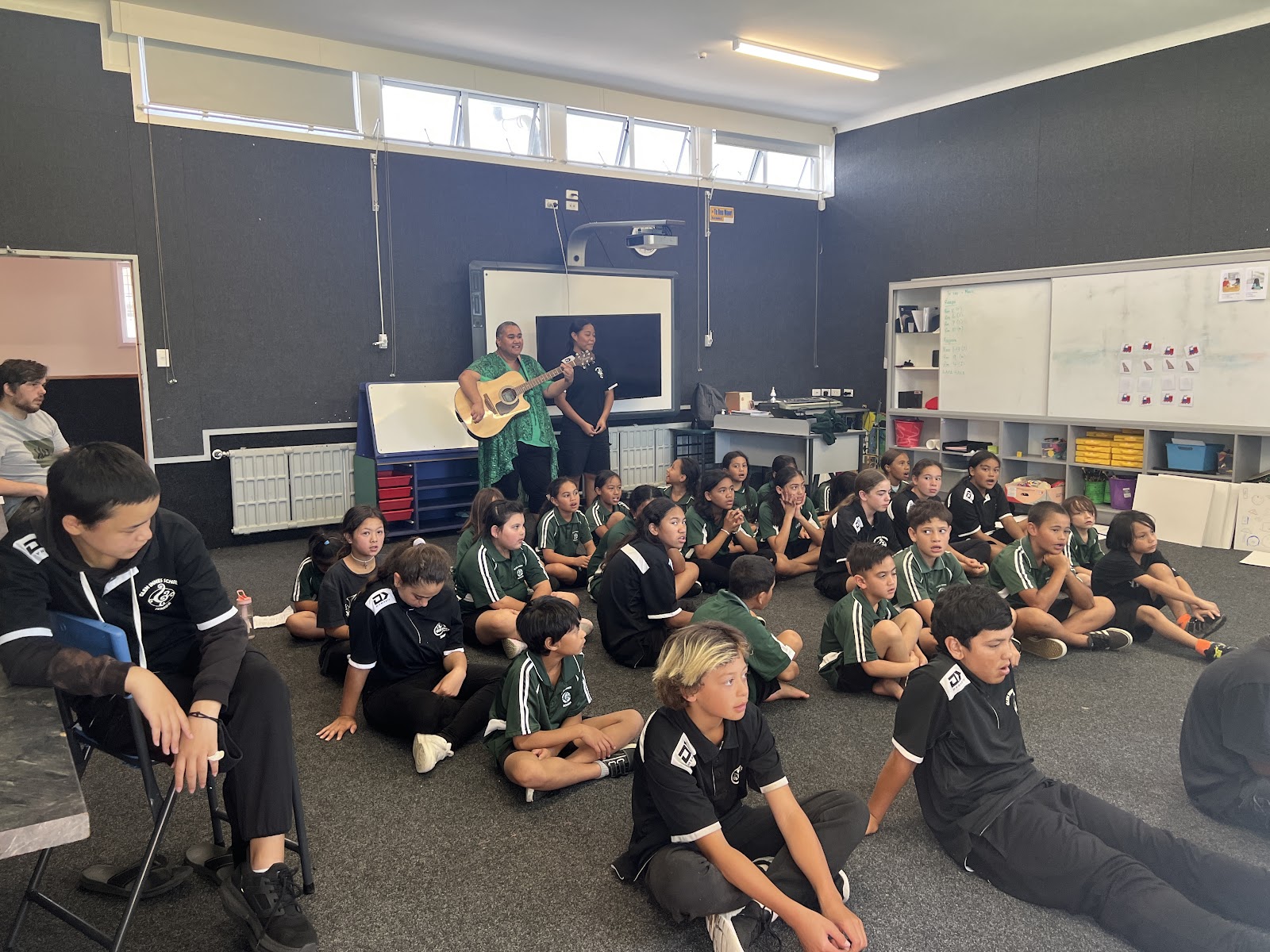
During Week 7 I prepared some interview questions in the google form and shared them with my class. Keeping the Inquiry focus question in my mind, I prepared some questions that were related to their culture and heritage language. The response allowed me to think deeper and beyond. Therefore, I decided to do something different in my class. I went to the resource room and collected all the Pasifika and Maori-themed stories. Then I created a slide presentation and used my first story from the Island of Tonga followed by a good discussion and activities. Apart from my guided reading sessions I have decided to do these Pasifika & Maori-themed stories every week. I will only use one block per week to do these past traditional stories. The active participation of my students allowed me to further make some new connections. These were my observations after having a lesson with them:

My Tongan students were responsive and at the same time, I could see the eagerness of other learners who were curious to know more about Tongan Culture. We came across some Tongan words and it was really good to see some Tongan students explaining to the class what it means. Furthermore, I got stuck in the pronunciation of certain words, and they helped me to pronounce them correctly.

To my surprise the ones who are usually quiet and shy, even took the ownership and participated in the discussion. This gives me a clear picture that tapping on children's prior knowledge and cultural capital will be quite rewarding and helpful.
Talking about the pictures in the story and making predictions about what might happen next and discussing prior knowledge the learner already has can help a L2 learner extensively (Nation, 2008).


Finally,  the informal observations and my lesson recording will show if there has been any change in participation levels.


Thursday, March 9, 2023

This is how I have stepped into 2023 by being more culturally visible!

During this 9 years of my teaching journey in New Zealand I felt that my classroom to some extent wasn’t culturally inclusive for all my students. Many of my Māori and Pasifika students were disadvantaged. Either it was due to not enough time, busy schedules, lots of other extra curricular activities happening and the pandemic that took so much of our precious learning time.  

After completing my TESSOL studies with The University of Auckland I feel good Pasifika learning requires that the teacher must have all three of the following teaching strategies: allowing Pasifika students respect as a learner; being able to scaffold Pasifika learning at the right level and engaging their Pasifika students in active learning. The Pasifika student must have confidence and trust in their teacher to engage with the teacher in the active pursuit of learning. The classroom teacher must also have confidence in the Pasifika student’s ability e.g., high expectations. If any of the parts described above are missing that means we as teachers must make some changes in our practice.

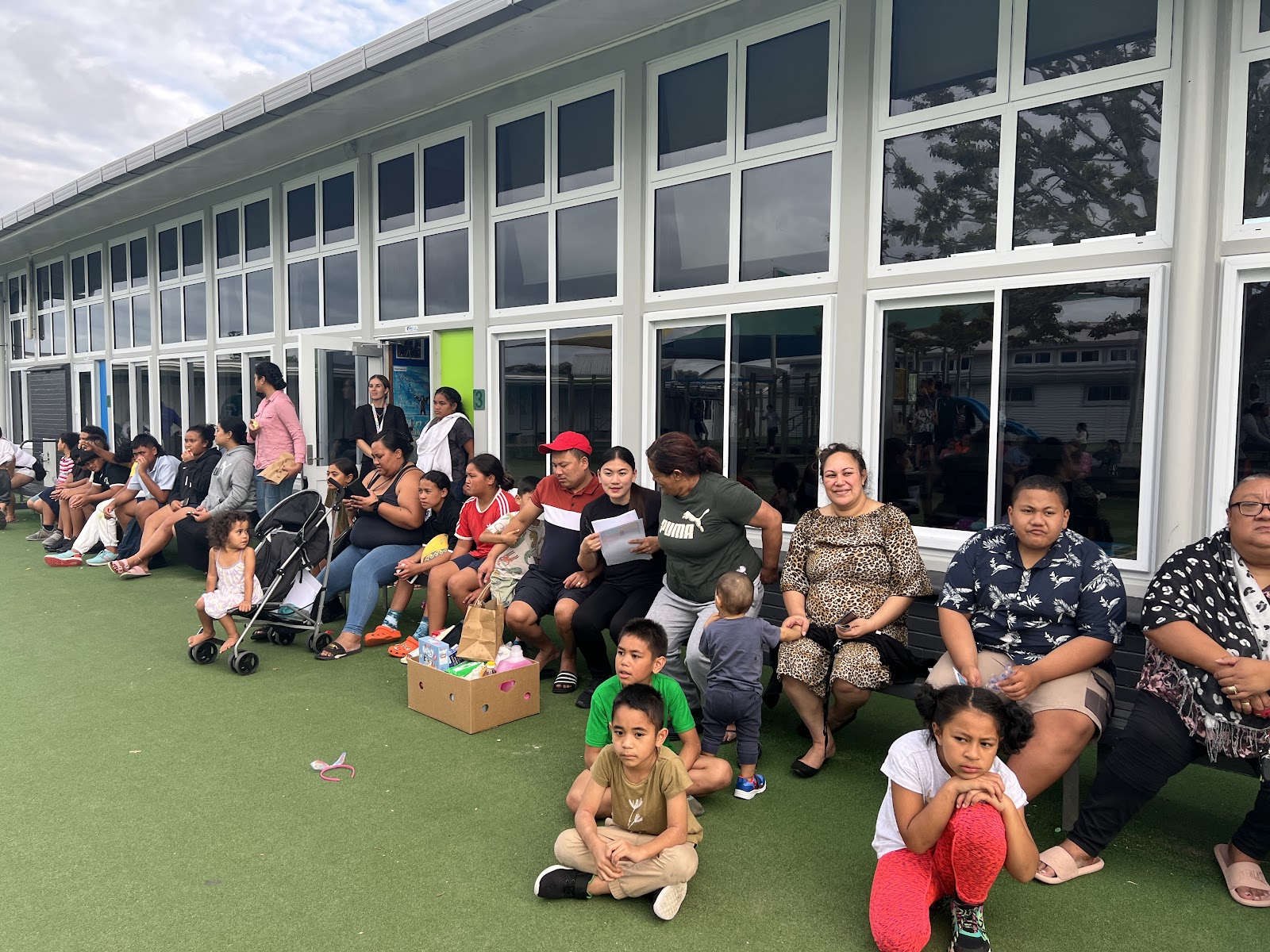
At GI school Term 1 is always very rewarding and we teachers are blessed to see our students showcasing their talents and culture. They celebrate their culture in a huge way and the whanau is so proud to see their children performing. However, this only lasts till term 1 and afterwards I could see our multicultural school is not doing much for what our children already have. One of the most valuable assets that they have is their cultural values. They know so much yet we as teachers do not actually see the full potential and other great benefits. We are not using their cultural capital which in fact carries so much weight.  We are trying to use other modern online teaching resources like Twinkl, Resource cupboard, Reading Eggs and so on  to improve their Reading and Writing. I am not saying these resources are of little value . I do agree that it helps, our tamariki enjoy and we as teachers are able to get so many good things for our tamariki. In saying that if  our learners  interact socially and share their cultural stories, that would actually help them to gain more confidence.  Instead of knocking on their prior knowledge, we begin to introduce more new and foreign things that go over their head. Why can’t we understand that this problem can be handled in a much easier and traditional way!

So this is how I have stepped into 2023 by being more visible in culturally responsive teaching. That means using students' customs, characteristics, experience, and perspectives as tools for better classroom instruction.


Monday, March 6, 2023

Planning for an Effective Teacher Inquiry!

Why focus on inquiry and on Māori and Pasifika student achievement?

The New Zealand Curriculum and Te Marautanga o Aotearoa explain why an inquiry approach to teaching is so important. Since any teaching strategy works differently in different contexts for different students, effective pedagogy requires that teachers inquire into the impact of their teaching on their students (Ministry of Education, 2007b, page 35).

The New Zealand Curriculum describes a cyclical process of inquiry that it calls “Teaching as Inquiry”. The purpose of the Teaching as Inquiry cycle is to help students achieve worthwhile learning that will lead them to become “confident, connected, actively involved, and lifelong learners” (Ministry of Education, 2007b, page 8).

For 2023 I have decided that my learning goals will be to increase my  pedagogical knowledge and skills in  Reading area by further  exploring culturally responsive pedagogies and how I could apply them to enable my Māori and Pasifika students to achieve their full potential.

Therefore, I have chosen The  achievement challenge number 1

Raise Maori student achievement through the development of cultural visibility and responsive practices across the pathway as measured against National Standards and agreed targets for reading Years 1-10.

As said good inquiry happens in teams, as such I had a good discussion with my syndicate team and also with my Senior Syndicate Leader. My Team leader is a Tongan and she works with the local Pasifika team as well and that’s just a blessing for me because she has a wealth of Pasifika Knowledge. Thus, Hevaha Tua’koi has shared some great insight and experience in relation to Pasifika learners. I also had a discussion with the Deputy Principal  Zhydah Petersen and she happily shared her experience with me in relation to our Maori and Pasifika learners at school. After much discussion and thoughts and with the help of these two senior leaders I came up with this Inquiry Focus and I feel it is quite powerful and this will give me a real challenge on how to use culturally responsive teaching and learning in the classroom.

My Inquiry Focus for 2023 is:

Will a focus on cultural visibility and prior knowledge accelerate student confidence and capability in Reading?


References


Ministry of Education (2007b). The New Zealand Curriculum for English-medium     

    Teaching   and Learning in Years 1–13. Wellington:Ministry of Education.

    Available at http://nzcurriculum.tki.org.nz


Sunday, March 5, 2023

Teaching As Inquiry 2023

I am very excited to be appointed as a Manaiakalani Community of Learning Teacher (within schools). This is a great opportunity to share my thoughts, ideas, learning strategies, successes and areas for improvement. I am very fortunate that my colleague Mrs Kirby has also been appointed as a CoL Teacher and we will be working collaboratively to raise and accelerate student achievement at our school.

My achievement challenge is to Raise Maori student achievement through the development of cultural visibility and responsive practices across the pathway as measured against National Standards and agreed targets for reading Years 1-10.

I hope to achieve acceleration by focusing on culturally responsive teaching in my class and also tapping on their cultural capital and prior knowledge. 

I hope to achieve this by implementing strategies from my past experiences, collaboration with my team, working closely with the whanau, local GI community and as well as using TESSOL strategies.

Actually it started quite well as I had this opportunity to collaborate with the whanau during Meet the Teacher Evening. 


Tuesday, February 14, 2023

2023 COL Interview....

What achievement challenge are you considering as an area of focus in 2023 and why? Include in your WHY both evidence and your own passion/expertise

The  achievement challenge number 1 - Raise Maori student achievement through the development of cultural visibility and responsive practices across the pathway as measured against National Standards and agreed targets for reading Years 1-10.

My Inquiry focus question for 2023 is: To what extent does students’ cultural capital and  their prior knowledge would impact learners shifts/achievement in Reading and Writing?

For the past 22 years I have been in the teaching field and I am proud to be a teacher who is culturally rich and has brought a wealth of cultural knowledge to the classroom. Being a bilingual, originally from Fiji, migrant in New Zealand, completed my studies in Pasifika speciality and recently completed my TESSOL program gives me a real insight into my second language learners’ dynamics.

I have to mention that GIS is a culturally responsive school. It offers a learning environment where every students’ cultures, languages and life experiences are acknowledged, validated and celebrated. Towards the end of Term one we have our cultural celebration and here we can see all our students take so much pride in their costumes and the performance. However, I have noticed that we are not making good use of this wealth of cultural diversity as this can hugely assist our tamariki’s language learning. For example, interviews with family members, assignments asking students to write about learning experiences that occur outside of school, and assignments involving family stories and traditions all can play a significant role in discovering information about a students' cultural heritage.

For instance my 9 year old daughter who is in year 6 now experiences a lot of difficulties in her Writing especially. Last year I tried my best to help her in composing her recounts and do her daily reading. This still did not help her much. But one thing she took great interest in was her weekly classical dance practice. I began to notice that she started doing research on google and youtube about her dance form, where it originated from and the way the dancers put on traditional outfits and the significance of the jewellery. In term 4 she did her e-asttle writing assessment whereby she had to write a recount about what she did really well that made her family and friends proud. Her teacher was surprised as she had recounted about her experience, proudly explaining about her dance form and giving all the finer details that she has learnt about her culture. She managed to get a 3B in her writing test, which was a big shift. 

At that point I again felt the importance of heritage language, culture and the contextual learning which is very important to our second language learners.

What learnings from the 2017 - 2022 CoL teacher inquiries have informed or inspired your thinking.

I have watched the 2022 Bursts and Bubbles live stream and all of them were brilliant and inspired me to choose a visible inquiry that will inspire my learners to achieve their challenge. I have listened to Scott’s (Tamaki College) presentation and he reflected on local history and student engagement. He mentioned in his blog that “There is evidence to suggest that an authentic engagement with local history via Mana Whenua lifts both student interest and engagement with the stories of the past”. This finding does tell me the importance of culturally responsive teaching and how the students enjoy the stories about the past especially in their community. His Inquiry focus has inspired me in a sense that students take more pride in their cultural history and they actually enjoy knowing more from their parents and grandparents.

How would your work support Manaiakalani pedagogy and  kaupapa?
All these years I have practised this pedagogy therefore I will use it in my lessons too. 
I will mostly use collaborative pedagogy with my learners. It will be learner-centred so that they are empowered to share their thoughts and opinions freely and confidently.
I will also ensure that learning is ubiquitous and visible as well.
My inquiry will  follow the learn, create and share model as I dive deeper into reading, create a structured approach to literacy that best meets the needs of my tamariki and share this teaching inquiry with my colleagues at Glen Innes School, and the wider Manaiakalani CoL. 

Which elements of the extensive Manaiakalani research findings inform or challenge you as you think about this?

I explored Edpotential and read the cluster report for Manaiakalani and the school report. Manaiakalani reading data suggests that reading is an area of need. 
I have noticed for PAT Reading comprehension for 2021 Y5 to 2022 Y6 Maori students have made significant progress till 2022 February and then there was a slight drop. On the other hand, Pasifika students have made significant progress throughout.  With my teacher inquiry in mind I am looking forward to seeing how I can help my Maori learners to achieve their target levels and my Pasifika learners to maintain that shift and even go beyond that. Another observation I made  was that the number of children participating in a SLJ programme (in the wider Manaiakalani programme) is growing.

How would you like to be supported in 2023 as you undertake this inquiry?

I have been using collaborative approach with my colleagues and I will continue to do so, so that my work becomes more manageable. 
I also believe in smart teachings like using graphic organisers and other learning tools that will help me to achieve my goal.
I am looking forward to engaging with the Manaiakalani team, and other CoL teachers in professional conversations.  I’d love to be supported to explore the research, the dynamics of culturally responsive teaching further in 2023. 
I would love to have the opportunity to share my findings during  staff meetings and visit classrooms during my release in order to share my findings.

How would you plan to support your colleagues in your school with THEIR inquiries and/or teaching in the area you are exploring?

I am looking forward to sharing my findings with my syndicate and also during staff meetings. Later in the year I would like to share my Inquiry journey with the whanau during assembly. Teachers from junior and senior sides are always welcome to my class and I am always willing to share my practices with them.

Tuesday, October 25, 2022

Doing more investigation on Language Acquisition Factors!

 Language Acquisition Factors

In the paragraphs below I am going to discuss three-second language acquisition factors that have an effect on XXX’s learning. Although there are many factors that affect L2 acquisition, I will mainly focus on motivation, attitude, personality and self-esteem.


Motivation

“The most important factor in second language acquisition success is motivation” (Lightbown & Spada, 1999, p. 163). Over the two years, I have observed that XXX is a highly motivated child. He tries his best to participate in all the activities and be in the limelight! According to XXX's mother, she motivates her son to study hard and always reminds him that they have come to New Zealand because she wants to give him a better education and a good lifestyle. This can only happen if XXX works hard in his studies and gets a white-collar job. The way XXX is motivated is more relevant to “Extrinsic” motivation. This type of motivation drives a person to be competitive in life and expects rewards such as money, praise or positive feedback (Khasinah, 2014). However, Brown (1994, as cited in Khasinah, 2014) states that  “researchers claim that intrinsic motivation leads to greater success in learning a foreign language, especially in a long run” (p.259). Overall, it is quite evident that XXX is motivated to acquire L2 but in long term, his extrinsic motivation behaviour might clash with his intrinsic motivation behaviour.


Attitude

XXX’s positive attitude to his target language reflects that he is a keen learner and knows very well the importance of L2. XXX’s parents attend parent-teacher conferences and participate in all school-related activities which might help XXX to progress in his learning areas. For instance, in the past years, our school participated in the Pasifika Early Literacy Project (PELP) whereby Pasifika children were given dual language books to take home and read with their whanau. To help XXX and other children in their L2 we made a large cloth bag known as a story sack that contained favourite children's books with supporting materials to stimulate language activities and make reading a memorable and enjoyable experience for everyone.  Hence, (Gardner, 1985, as cited in Khalid, 2016) states that L2 learners with positive attitudes toward the target language will learn L2 more effectively than those who lack positive attitudes. 


Personality and Self-Esteem

Over the two years, I have observed that XXX is a quiet boy who likes to stay in his own space working quietly. However, this year I have seen some changes he is more talkative during class discussions participates in extra co-curricular activities and takes an active interest in the whole school Jump Jam. To achieve something in life, a person needs some degree of self-esteem and self-confidence  (Khasinah, 2014).  For instance, our school’s focus for this year is “Mastery”. Thus, the principal asked some of the children about one thing they are going to master this term. XXX replied that he is going to master “backstrokes” during swimming class. I felt it was very impressive for him to give that type of answer. Being surrounded by supportive parents and a teacher creating the right atmosphere for learning, XXX will be motivated to master L2  (Khasinah, 2014).